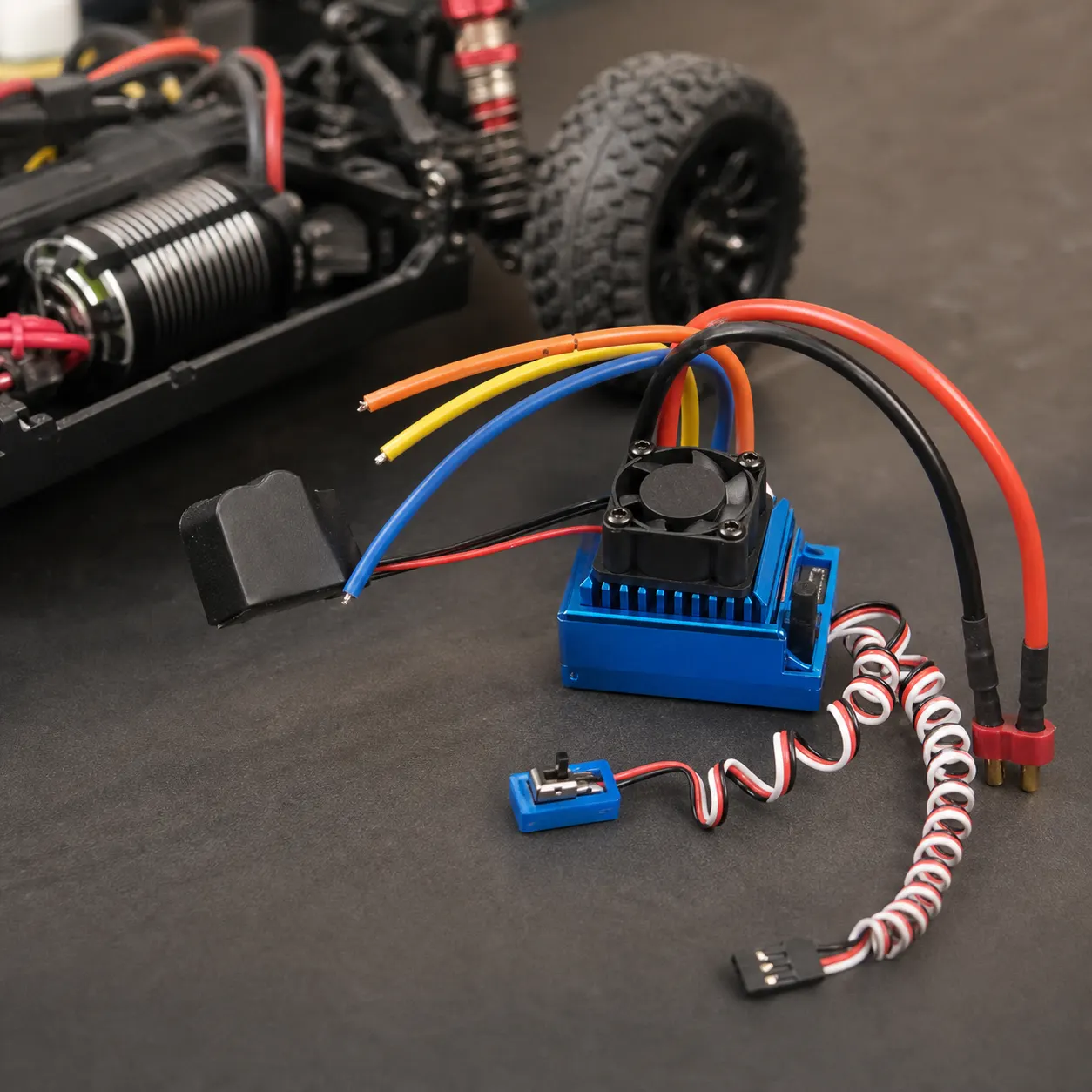
Short answer: A 120A ESC for an RC car should be treated as a compatibility question, not an automatic upgrade. Dilwercbru lists a blue 120A electronic speed controller for RC cars and identifies remote-control operation and alloy material. Those facts place the part in the controller category, but they do not confirm a motor type, battery voltage, connector, receiver, chassis or programming setup. Before buying, record the electronics already in your car, compare the physical space and treat every missing specification as unknown. The right replacement is the one that matches the whole vehicle system, not just the largest number in the title.
Read the 120A listing narrowly
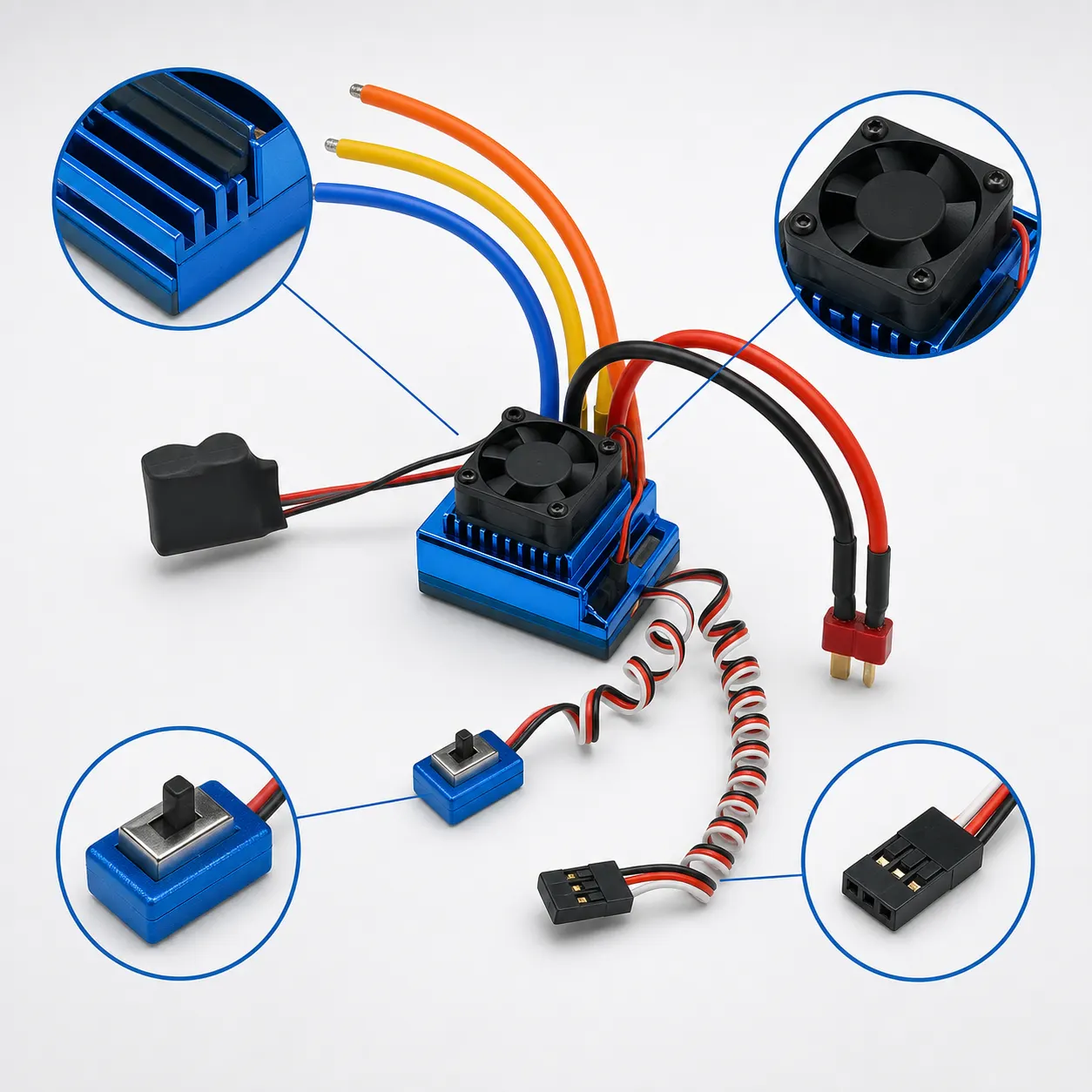
The product page identifies a blue 120A electronic speed controller for RC cars. It also lists remote-control operation and alloy material. That is enough to identify the component category and the selected appearance, but not enough to match the unit to a particular vehicle. Do not turn a current rating in a title into a promise about speed, runtime, heat control or vehicle performance.
An ESC sits between the radio control system and the motor, but the listing does not publish the wiring or control protocol needed for a fit decision. A buyer needs to compare the old controller, motor, battery and receiver rather than assuming the new part is a drop-in replacement.
| Published fact | What it tells you | What it does not confirm |
|---|---|---|
| 120A | The listed controller rating | Motor suitability, peak conditions or speed |
| RC car | The stated vehicle category | A named model or chassis fit |
| Remote-control operation | The intended control context | Receiver, transmitter or calibration compatibility |
| Alloy material | A listed construction attribute | Cooling, waterproofing or safety performance |
Check the rest of the car
Start with the motor and battery already installed. Record the motor type and the battery information shown on labels or in the vehicle manual, then compare them with the replacement documentation. Manufacturer does not specify whether this controller is brushed or brushless, sensored or sensorless, or what voltage and cell range it accepts.
Then inspect the connectors and receiver lead. A controller can belong to the right product category and still need a different plug, cable route or mounting method. Manufacturer does not specify connector type, lead length, receiver compatibility, dimensions or fixing hardware.
- Photograph the existing ESC, motor leads, battery plug and receiver connection before removing anything.
- Write down the motor type, battery details, connector shapes and available mounting space.
- Compare those notes with the product page and mark every unanswered item as manufacturer does not specify.
- Confirm the replacement will not crush wires or interfere with the body shell.
- Only then decide whether to ask for documentation, choose another controller or proceed.
What a replacement may not fix
A no-throttle symptom can come from the ESC, but it can also involve the battery, connector, motor, receiver, transmitter settings or calibration. Steering working normally does not isolate the fault. The product page does not claim to diagnose or cure any particular fault.
Keep the repair boundary clear. This listing is not documented as a complete RC car, motor, battery, charger, receiver, transmitter or universal electronics kit. It may be a controller candidate after the existing system has been identified, but the title alone cannot prove that.
Limits and checks before buying
Pause if you need a model-specific fit, confirmed brushed or brushless support, a published voltage range, named connectors or a stated mounting size. Manufacturer does not specify those details on the current product page. Also pause if you are relying on a waterproofing, certification, speed increase, runtime or service-life claim.
The careful purchase is conditional: the category and 120A label may match the job, but the motor, battery, receiver, wiring and chassis still decide whether the part belongs in the car.
Related guides and product details
Treat the 120A ESC as a candidate only after the motor, battery, receiver, connectors and mounting space have all been checked. Read Electronic Speed Controller for an RC Car: What to Check for related guidance. Read RC Motor Controller Replacement: Check Fit Before Installation for related guidance. Review the documented specification on the 120A RC Car Electronic Speed Controller, Blue product page before ordering.
Sources and safety context
- Supports the blue 120A RC car controller category, remote-control operation and alloy material; the page leaves compatibility specifications open. Current Dilwercbru RC car electronic speed controller product page.