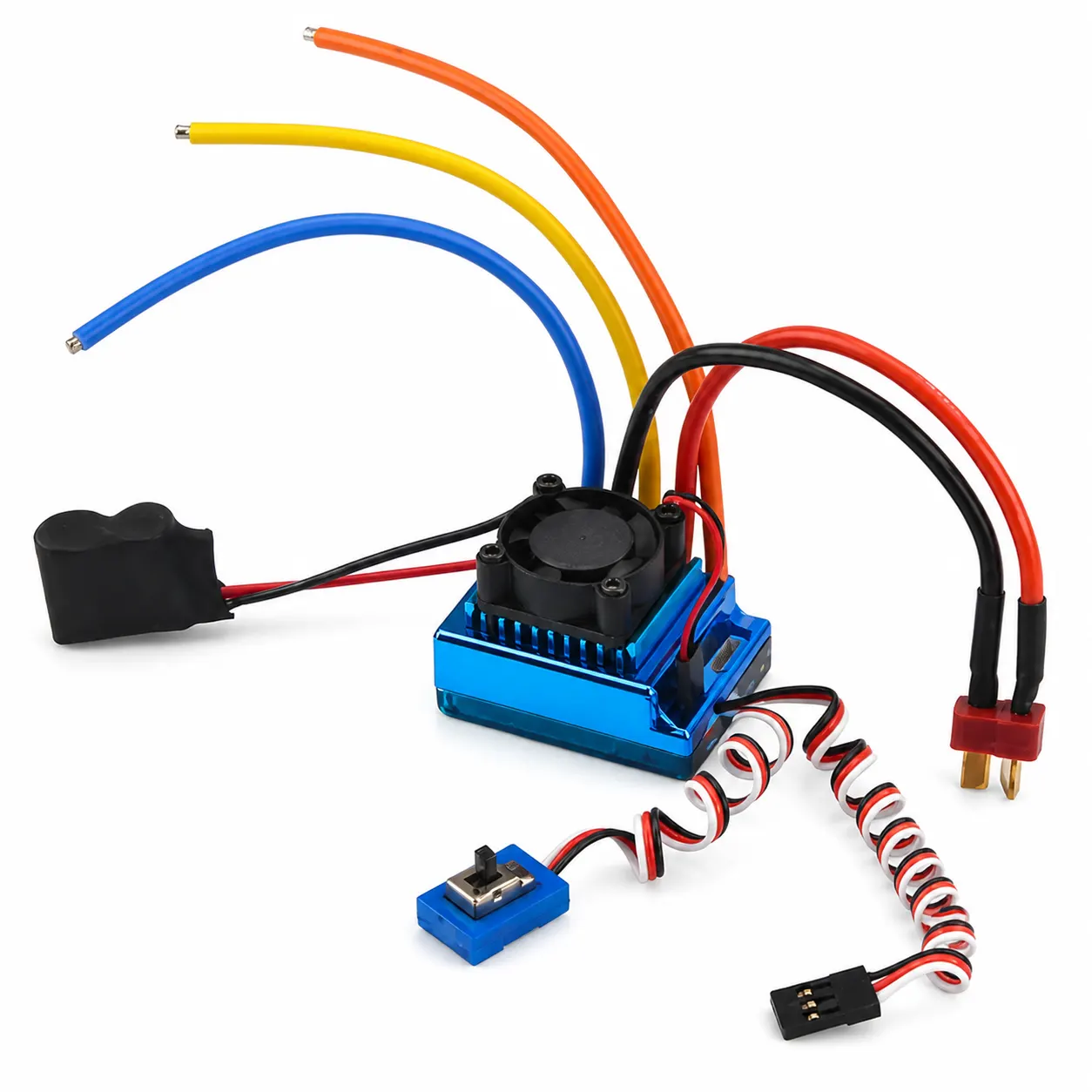
Short answer: For an RC motor controller replacement, document the part already in the car before ordering its successor. Dilwercbru lists a blue 120A electronic speed controller for RC cars, with remote-control operation and alloy material shown on the product page. That confirms the component category but not the motor system, battery range, connector layout, receiver fit or mounting dimensions. A replacement can be sensible when the existing controller is identified and the rest of the installation matches. If those facts are missing, write them down as manufacturer does not specify instead of treating the 120A label as a universal answer.
Confirm the fault before replacing
A controller replacement is easier to justify when the symptom and the component have been separated from other possibilities. Note whether the car powers up, whether steering responds, whether the motor stutters, and whether the fault follows a connector or battery change. Those observations do not prove the cause, but they make the next check more useful.
The product page does not claim to diagnose any fault. It identifies a blue 120A controller for an RC car. Do not promise that installing it will restore throttle, increase speed or solve a problem caused by the receiver, transmitter, motor or battery.
- Disconnect the battery and photograph the existing wiring, plugs and controller position.
- Record the old controller label and the motor, battery and receiver details.
- Inspect loose connectors, damaged insulation and obvious mounting constraints.
- Compare the replacement's documented facts with the recorded system.
- Proceed only when the remaining unknowns have been answered or accepted as a reason to choose another part.
Compare installation facts
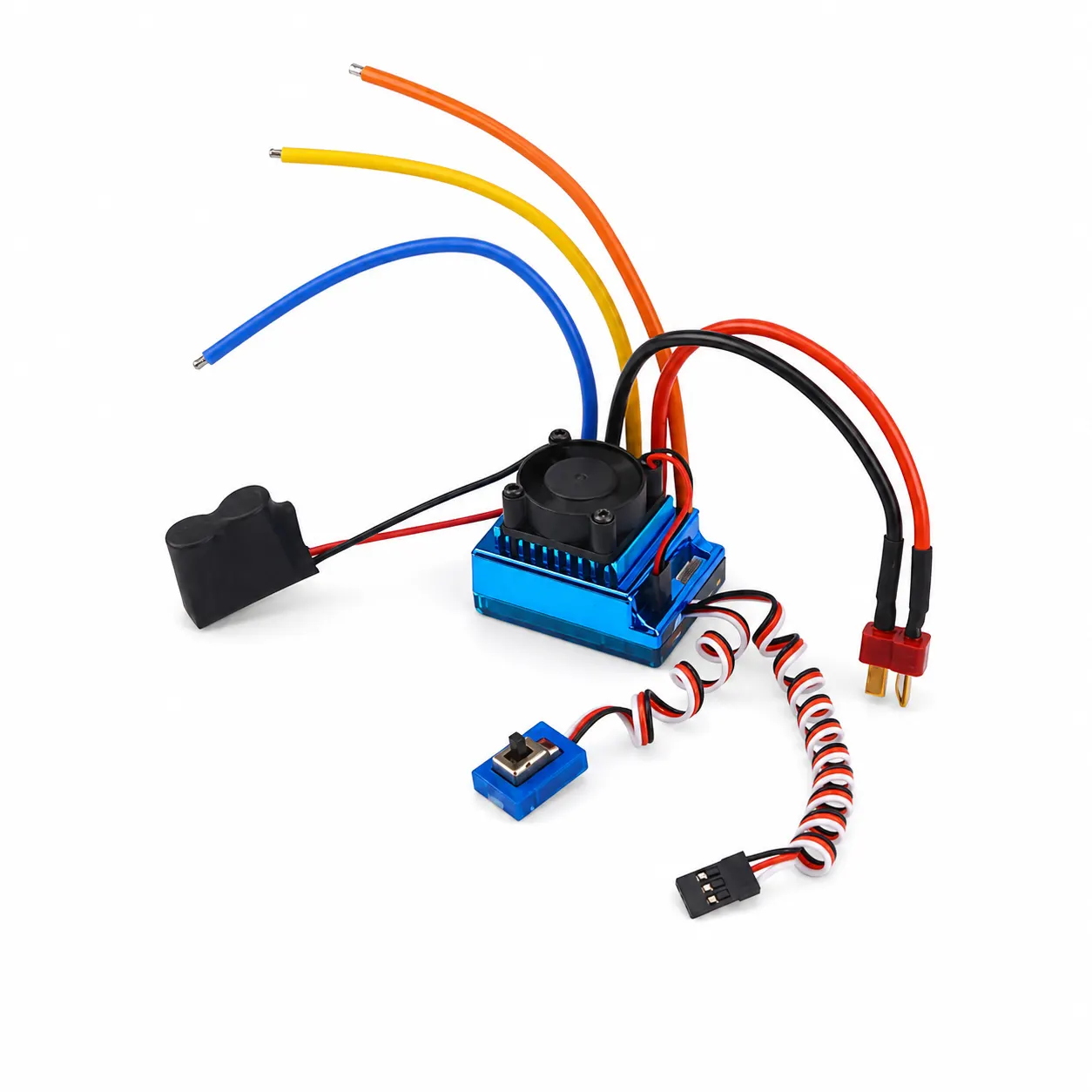
A replacement has to connect and fit before any performance question matters. Check the motor interface, battery plug, receiver lead, cable reach and space below the body shell. Manufacturer does not specify connector type, lead length, dimensions, fixing method or receiver compatibility for this product.
Alloy material is a listed attribute, not a guarantee of cooling, water resistance, impact resistance or safe operation in a particular vehicle. Keep the claim at the level the page supports.
| Replacement check | Record from the existing car | Product-page status |
|---|---|---|
| Motor interface | Motor family and wiring | Manufacturer does not specify |
| Battery connection | Voltage, cells and plug | Manufacturer does not specify |
| Radio connection | Receiver lead and transmitter setup | Remote-control operation listed; exact compatibility unspecified |
| Physical fit | Available length, width and height | Dimensions and fixing are not specified |
Plan the first installation check
If the compatibility questions are answered, document the old wiring before removal and keep power disconnected during the physical work. After fitting, use the vehicle and radio instructions for any calibration instead of guessing a controller-specific process that the product page does not publish.
The first test should be controlled and local to the car, with the body and wires clear of moving parts. That is a cautious installation practice, not a claim that the product has a particular safety system or operating limit.
Limits and checks before buying
This product may be a replacement candidate for an RC car where the owner can verify motor, battery, receiver, connectors and mounting space. It is not documented as a complete motor controller kit, a named-model replacement or a guaranteed cure for every no-throttle symptom.
Manufacturer does not specify motor type, voltage range, connector type, dimensions, waterproofing, programming, service life or safety certification. If any one of those is essential, pause and obtain the missing documentation before ordering.
Related guides and product details
A sound RC controller replacement begins with the wiring and specifications already in your car, not with the 120A number alone. Read 120A ESC for an RC Car: Checks Before Buying for related guidance. Read Electronic Speed Controller for an RC Car: What to Check for related guidance. Review the documented specification on the 120A RC Car Electronic Speed Controller, Blue product page before ordering.
Sources and safety context
- Supports the blue 120A RC car controller identity, remote-control operation and alloy material, while leaving installation fit details unspecified. Current Dilwercbru RC car electronic speed controller product page.